Choosing the right ground cover for your landscape is one of the most important decisions you’ll make when upgrading your yard. While plants often get the spotlight, what surrounds them plays a major role in water conservation, maintenance, soil health, and the overall appearance of your landscape.
For Colorado homeowners, the decision often comes down to rock, mulch, or a professionally designed xeriscape bed. Each option offers distinct advantages, and the best choice depends on your property’s goals, maintenance preferences, and the unique demands of Colorado’s climate.
If you’re considering a landscape renovation or simply looking for ways to reduce maintenance and water usage, here’s how these three popular options compare.
Why Ground Cover Matters in Colorado
Colorado presents unique landscaping challenges. The Front Range experiences:
- Semi-arid conditions
- Intense sunshine
- Low humidity
- Frequent freeze-thaw cycles
- Heavy clay soils in many areas
- Periodic drought conditions
The right landscape materials help protect soil, conserve moisture, reduce weeds, and improve the overall health of your plants while enhancing your home’s curb appeal.
Rather than viewing rock, mulch, and xeriscape beds as competing options, it’s helpful to understand how each contributes to a successful landscape design.
What Is Landscape Mulch?
Mulch refers to organic materials spread over planting beds to protect the soil and surrounding plants.
Common mulch materials include:
- Shredded bark
- Wood chips
- Cedar mulch
- Pine bark
- Compost-based mulch
Organic mulch naturally decomposes over time, enriching the soil while providing numerous benefits.
Benefits of Mulch
Mulch remains one of the best choices for many planting beds because it:
- Retains soil moisture
- Helps regulate soil temperature
- Suppresses weeds
- Improves soil structure as it breaks down
- Reduces erosion
- Protects plant roots during temperature swings
For newly planted trees, shrubs, and perennial gardens, mulch creates an ideal growing environment.
Potential Drawbacks
Because organic mulch decomposes, it requires replenishment every few years. Wind may also move lightweight mulch during Colorado’s stronger storms.
However, many homeowners find that the soil health benefits far outweigh the occasional maintenance.
What Is Decorative Landscape Rock?
Landscape rock uses stone instead of organic materials to cover planting beds.
Popular options include:
- River rock
- Crushed granite
- Pea gravel
- Decorative cobble
- Lava rock
Rock provides a clean, contemporary appearance that complements many Colorado homes.
Benefits of Landscape Rock
Decorative rock offers several long-term advantages:
- Extremely durable
- Doesn’t decompose
- Minimal replacement required
- Excellent weed suppression when properly installed
- Works well in modern and natural landscapes
- Reduces maintenance compared to traditional lawns
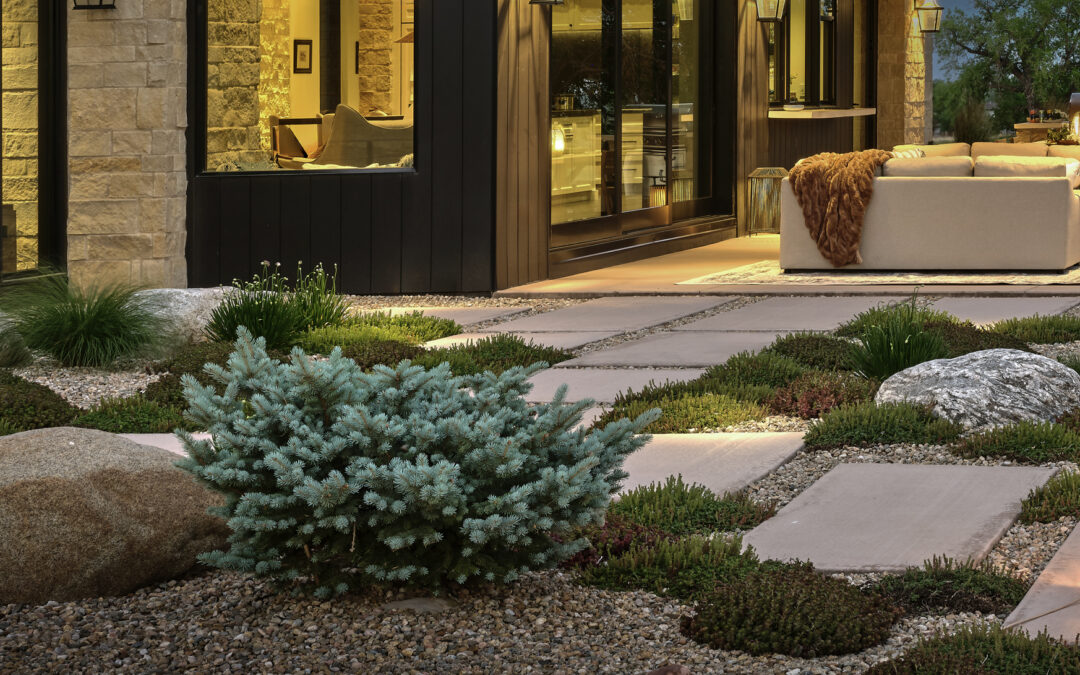
Rock is especially effective around drainage areas, dry creek beds, pathways, and slopes where erosion may be a concern.
Potential Drawbacks
Rock absorbs and reflects heat, which can increase temperatures around nearby plants during Denver’s hot summers.
Unlike mulch, rock does not improve soil health over time. It can also make future planting modifications more labor-intensive.
For these reasons, rock works best when used strategically rather than covering an entire landscape.
What Are Xeriscape Beds?
A xeriscape bed goes beyond simply replacing mulch with rock.
Xeriscaping is a comprehensive landscape design approach that emphasizes water conservation through thoughtful planning, climate-appropriate plants, efficient irrigation, and sustainable materials.
A professionally designed xeriscape bed typically combines:
- Native and drought-tolerant plants
- Organic mulch or decorative rock
- Efficient irrigation
- Soil improvements
- Proper plant spacing
- Water-wise design principles
Benefits of Xeriscape Beds
Properly designed xeriscape beds provide numerous long-term advantages.
Lower Water Use
One of the primary goals of xeriscaping is to reduce irrigation while maintaining a beautiful landscape.
Many xeriscape gardens use significantly less water than traditional turfgrass landscapes without sacrificing visual appeal.
Lower Maintenance
Because xeriscapes rely on adapted plant species, homeowners spend less time mowing, fertilizing, and watering. Seasonal pruning and occasional maintenance remain important, but overall upkeep is greatly reduced.
Four-Season Interest
Today’s xeriscapes are far more than gravel and cactus.
A professionally designed Colorado xeriscape can include:
- Flowering perennials
- Ornamental grasses
- Native shrubs
- Evergreen accents
- Decorative stone
- Seasonal blooms
- Pollinator-friendly gardens
The result is a vibrant landscape that changes beautifully throughout the year.
Environmental Benefits
Xeriscapes also support:
- Pollinators
- Native wildlife
- Soil health
- Reduced runoff
- Water conservation
These landscapes work with Colorado’s environment instead of fighting against it.
Comparing Rock, Mulch, and Xeriscape Beds
Each option serves a different purpose within a landscape.
Mulch Is Best For:
- Garden beds
- Newly planted trees
- Shrub borders
- Perennial gardens
- Improving soil health
Rock Is Best For:
- Modern landscape designs
- Drainage solutions
- Dry creek beds
- Decorative accents
- High-traffic areas
- Erosion-prone slopes
Xeriscape Beds Are Best For:
- Water conservation
- Low-maintenance landscapes
- Native plant gardens
- Sustainable landscape design
- Long-term landscape performance
The best landscapes often incorporate all three rather than relying on just one.
Which Option Saves the Most Water?
If reducing water consumption is your primary goal, a professionally designed xeriscape generally offers the greatest long-term savings. Simply replacing mulch with decorative rock doesn’t automatically reduce irrigation needs. The plants themselves and how they’re grouped and irrigated play a much larger role in water use.
Efficient irrigation, drought-tolerant plants, proper soil preparation, and thoughtful design have a much greater impact than ground cover alone.
Which Requires the Least Maintenance?
Maintenance varies depending on installation quality and plant selection. Decorative rock requires very little replacement but may accumulate leaves, debris, or weeds over time. Mulch requires occasional replenishment but improves soil naturally.
Well-designed xeriscape beds typically offer the best balance of low maintenance and long-term landscape health. Rather than eliminating maintenance entirely, they significantly reduce mowing, watering, and routine upkeep.
Can You Combine All Three?
Absolutely. Many of Colorado’s most beautiful landscapes combine mulch, decorative rock, and xeriscape principles.
For example:
- Organic mulch around trees and shrubs
- Decorative rock in drainage areas
- Xeriscape planting beds featuring native plants
- Natural stone pathways connecting outdoor living spaces
This layered approach creates visual interest while maximizing functionality.
Create a Landscape That Works for Colorado
There isn’t a one-size-fits-all answer when comparing rock, mulch, and xeriscape beds. The most successful Colorado landscapes use each material where it performs best, creating outdoor spaces that are beautiful, functional, and sustainable. Whether you’re looking to reduce maintenance, conserve water, improve curb appeal, or build an outdoor living space you’ll enjoy for years to come, the right combination of materials can make all the difference.
At Lifescape Colorado, we take a holistic approach to landscape design. Our experienced team carefully considers your property’s layout, soil conditions, irrigation needs, architectural style, and long-term goals to create a landscape that thrives in Colorado’s unique climate. From custom hardscaping and sustainable landscape design to xeriscaping and ongoing property care, we create outdoor environments that balance timeless beauty with lasting performance.
Ready to Upgrade Your Landscape?
If you’re considering replacing high-maintenance lawn areas, refreshing your planting beds, or planning a complete outdoor transformation, Lifescape Colorado is here to help. We’ll guide you through the best options for your property, recommend materials that complement your home and lifestyle, and design a landscape that delivers beauty, functionality, and sustainability for years to come.
Contact us today to schedule a consultation and discover how our award-winning landscape design, hardscaping, xeriscaping, and property care services can bring your vision to life.