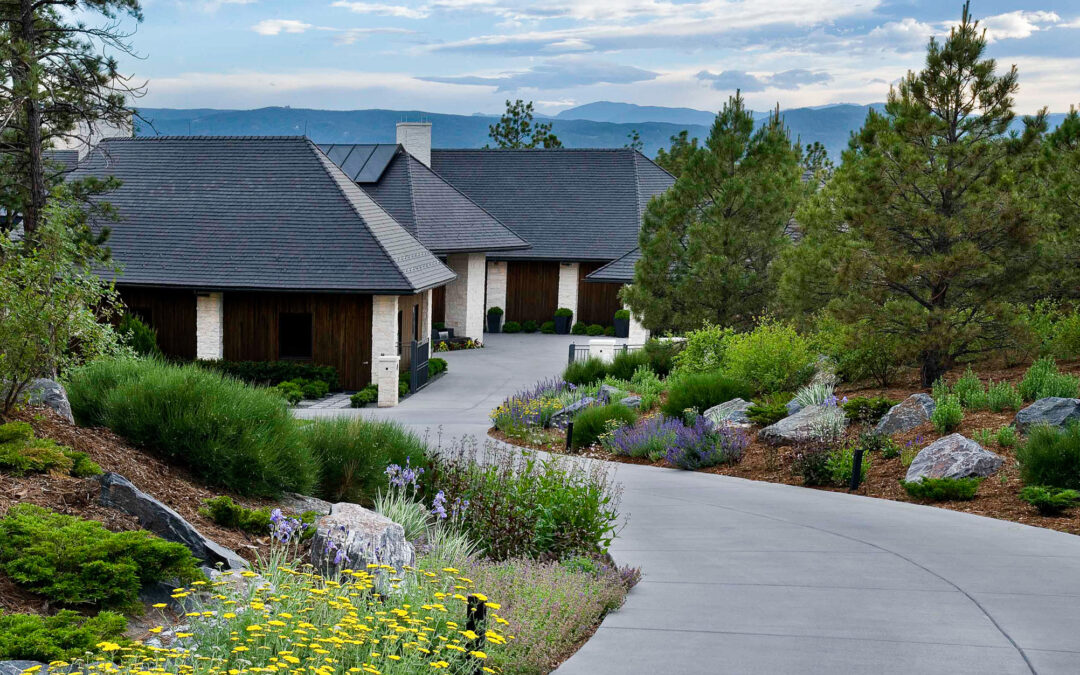
If you’ve spent any time around Colorado landscapes lately, you’ve probably heard a new word making the rounds: Coloradoscaping. Denver Water uses it. Colorado State University Extension and the Associated Landscape Contractors of Colorado have built a professional certification around it. And it’s more than a rebrand.
Coloradoscaping is a design approach that creates beautiful, resilient landscapes suited to our semi-arid climate. It blends native and climate-adapted plants, efficient irrigation, healthy soil, purposeful lawn and thoughtful hardscape to cut water use—without cutting beauty. It isn’t about settling for less landscape. It’s about building one that actually belongs here.
Wait—Isn’t That Just Xeriscaping?
Mostly, yes. Landscape professionals have practiced water-wise design for decades. The trouble is what happened to the word. Somewhere along the way, “xeriscape” got misheard as “zero-scape,” and people started picturing a yard stripped of plants and buried in gravel. You’ve seen these yards. So have we.
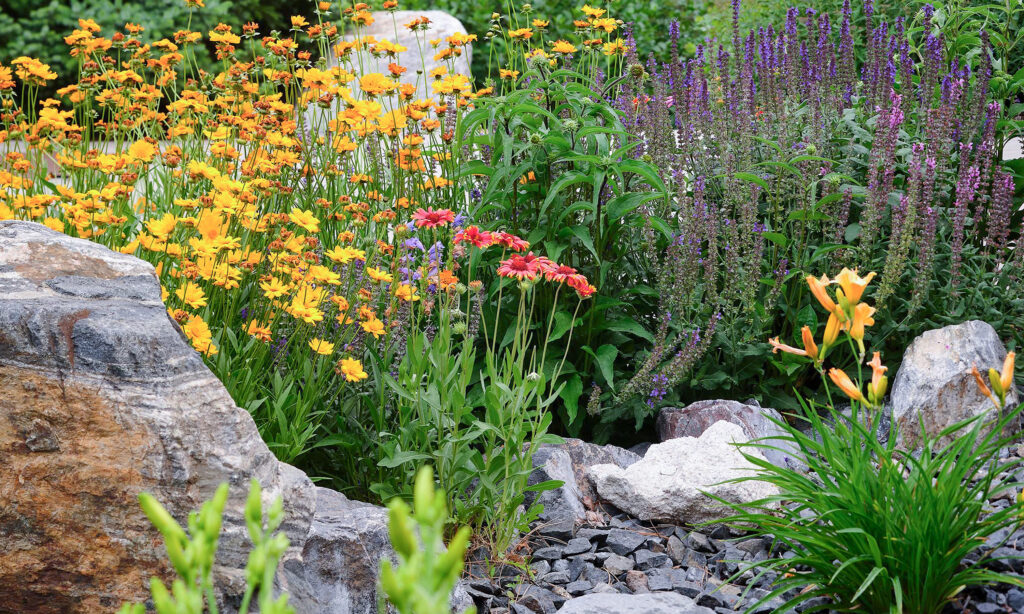
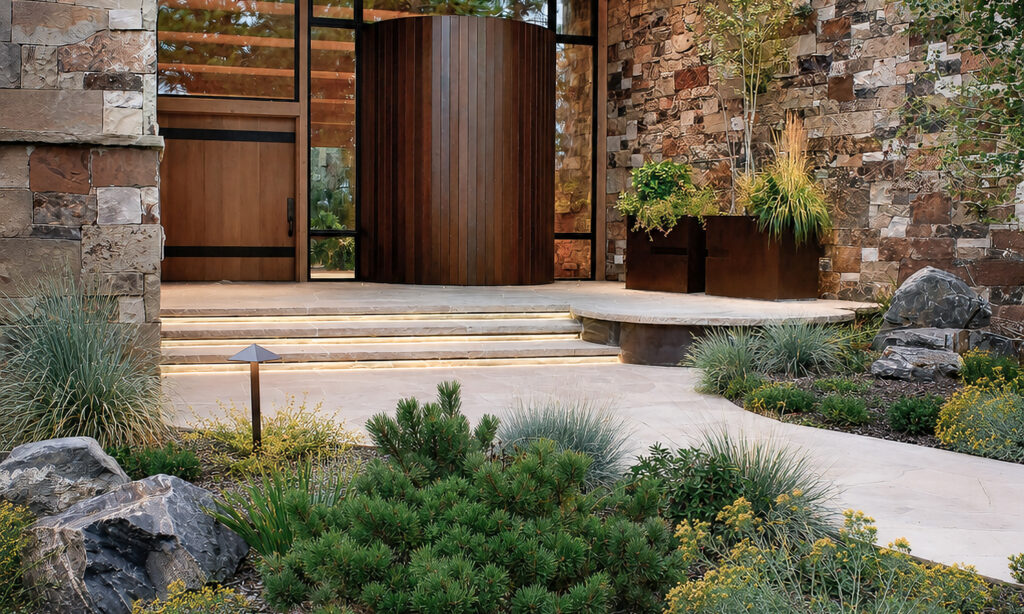
A well-designed Coloradoscape is the opposite of that. It’s plant-forward and visually alive—trees, flowering perennials, ornamental grasses, shrubs, groundcovers, usable lawn and outdoor living space, all working together, all connected to Colorado’s natural character. The new term is really a course correction: a way of saying that saving water and loving your landscape were never mutually exclusive.
What Goes Into a Coloradoscape?
Every property is different, but the successful ones share a few habits.
It starts with the site
Sun, shade, drainage, soil, wind, the architecture of the house, how you actually live outside—all of it shapes the design. A plant that thrives by the front walk may sulk twenty feet away.
Natives, yes—but not only natives
Colorado natives support pollinators and songbirds and give a landscape a real sense of place. Climate-adapted plants from other dry corners of the world widen the palette with color, texture and bloom times our natives can’t always match. The test isn’t a plant’s passport. It’s whether it can thrive in our dry air, intense sun and wild temperature swings without heroic amounts of water.
Water, applied with precision
Coloradoscaping doesn’t mean ripping out the irrigation system. New plants need consistent water to get established, and even a mature landscape appreciates help in a dry August. The difference is precision: drip lines, smart controllers, properly sized zones and plants grouped by thirst—so you’re never drowning one bed to keep another alive.
Healthy soil underneath it all
Good soil grows deeper roots, holds moisture longer and handles heat with more grace. Compost, aeration, mulch and living groundcovers do quiet, unglamorous work that pays off every July.
Lawn with a job to do
Nobody’s coming for your lawn. Kids, dogs and backyard games all make a fine case for keeping turf where it earns its place. The rethink is the lawn nobody walks on—narrow side strips, steep slopes, that corner no one visits. Those spots almost always do better as ornamental grasses, perennials or groundcover.
Hardscape that knows its role
Patios, walkways, walls and gathering spaces absolutely belong—when they support how you live outside. Acres of rock don’t. Too much exposed stone reflects heat and makes a space feel harsh. The best designs balance built and planted elements so the whole landscape feels layered and complete.
A Few Things Coloradoscaping Is Not
It’s not one aesthetic. A Coloradoscape can read loose and meadow-inspired or crisp and formal, naturalistic or contemporary. The principles don’t dictate a look—your home and your taste do.
It’s not maintenance-free, because no landscape is. Plants still need establishment, pruning and seasonal care, and irrigation systems need adjusting as things mature. The difference is that maintenance supports the design instead of endlessly propping up plants that never belonged on the site.
And it’s not all-or-nothing. Existing landscapes convert beautifully in phases—swap out the struggling turf, widen a planting bed, move a zone to drip, plant a shade tree—while keeping the mature trees and healthy plantings that already serve the property well.
Why this matters?
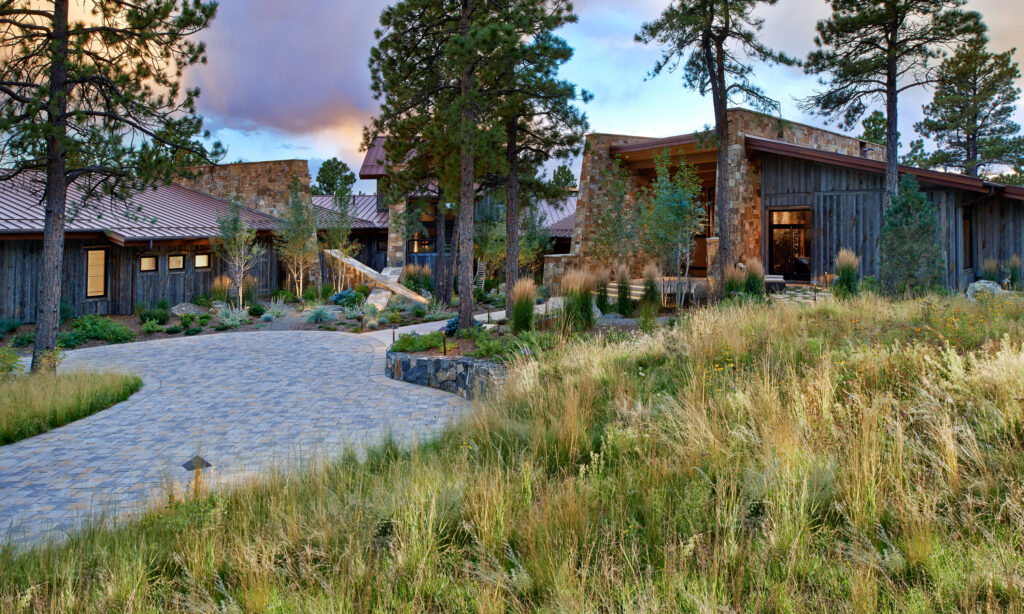
Lower water bills, for a start: Denver Water notes that water-wise Coloradoscapes use significantly less water than conventional Kentucky bluegrass landscapes, though actual savings depend on your plants, your irrigation and how much turf you keep. Beyond the bill, expect fewer dead plants to replace, more pollinators and birds, and more color, movement and texture across all four seasons. Best of all, a Coloradoscape gets better with age—more established, more expressive—instead of merely hanging on.
The Lifescape Take
At Lifescape Colorado, we believe a Coloradoscape should feel like a beautiful landscape first and a water strategy second. The design still has to create a sense of arrival, frame views, complement the home and support the way you live outside. Water efficiency is woven in from the first sketch—never bolted on at the end.
Our team brings landscape architecture, construction, horticulture, irrigation and long-term care together, so every decision works as part of a larger system. The result feels refined, established and unmistakably Colorado.