If your roses suddenly have holes in the leaves or your linden tree looks like it has been stripped almost overnight, Japanese beetles may be the culprit.
These metallic green beetles have become an increasingly common sight along Colorado’s Front Range. While they are small, they can do a surprising amount of damage in a short period of time. According to Colorado State University Extension, Japanese beetles feed on more than 300 species of plants, including many of the trees, shrubs, vines, and perennials commonly found in Colorado landscapes.
For Colorado homeowners, the best Japanese beetle control starts with early detection. Once adult beetles begin feeding, damage can escalate quickly, especially on roses, linden trees, grapevines, crabapples, Virginia creeper, raspberries, and other high-value ornamental plants.
What Japanese Beetle Damage Looks Like
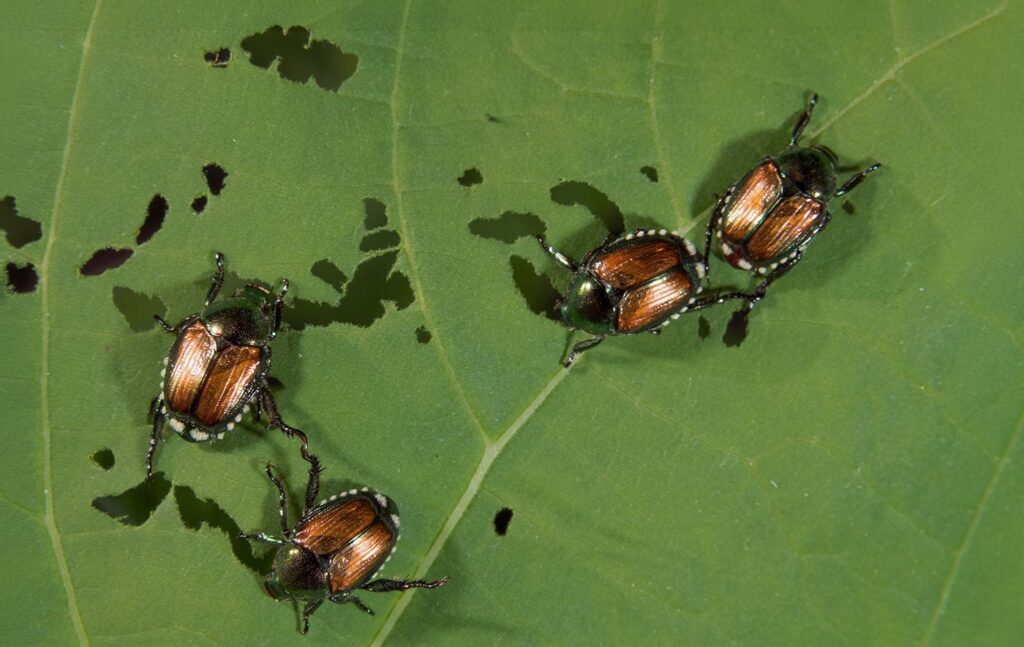
Adult Japanese beetles typically appear in late June and remain active through July and into August. They feed on leaves, flowers, fruit, and tender new growth, often leaving behind only the veins of the leaf.
This distinctive “skeletonized” appearance is one of the easiest ways to identify Japanese beetle damage. Leaves may look thin, lacy, or shredded. On heavily infested plants, the damage can seem to appear almost overnight.
Some of their favorite plants include:
- Roses
- Linden trees
- Grapevines
- Crabapples
- Virginia creeper
- Raspberries
Unlike many insects that feed alone, Japanese beetles gather in groups. Once a few beetles find a desirable plant, they release a scent that attracts more beetles, allowing damage to spread quickly across the plant and nearby areas of the landscape.
The Problem Does Not End with the Adult Beetles
Adult beetles are only part of the story.
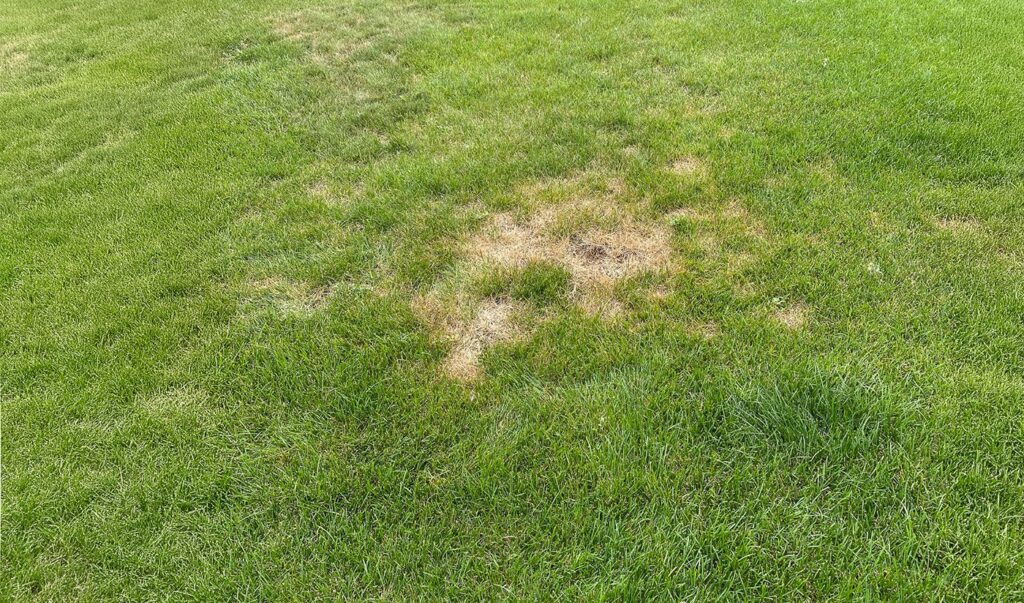
Later in the season, female Japanese beetles lay eggs in moist, irrigated lawns. Those eggs hatch into white grubs that live beneath the soil and feed on turfgrass roots.
As grub populations grow, lawns may develop brown or thinning patches. In some cases, damaged turf can become easier to pull back from the soil, almost like loose carpet. Lawns with active grubs may also attract skunks, raccoons, and birds looking for an easy meal.
This annual life cycle is one reason Japanese beetles often return year after year if left unmanaged. Adult beetles damage ornamental plants above ground, while grubs can impact lawns below ground.
What Colorado Homeowners Can Do
The sooner Japanese beetles are discovered, the easier they are to manage.
Start by regularly inspecting susceptible plants throughout the summer, especially roses, linden trees, grapevines, crabapples, and Virginia creeper. Look for shiny metallic green beetles, clusters of feeding insects, and leaves that appear skeletonized or lace-like.
If you notice just a few beetles, hand-picking them in the early morning and dropping them into a bucket of soapy water can help slow an infestation before it grows. Beetles are typically less active in the morning, which makes them easier to remove.
For larger populations, targeted treatments may be appropriate to help protect high-value ornamental plants. Preventive grub control, applied at the proper time, can also help reduce future beetle pressure in lawns.
One thing Colorado State University Extension does not recommend is placing Japanese beetle traps near valuable landscape plants. Although traps can catch a large number of beetles, they often attract even more beetles into the area than they eliminate.
Professional Japanese Beetle Control for Colorado Landscapes
Japanese beetles are unlikely to disappear on their own, but they do not have to take over your landscape.
For homeowners with established landscapes, mature trees, roses, perennial gardens, and high-value outdoor spaces, Japanese beetle control is best viewed as part of a broader plant health and landscape care strategy.
An effective approach may include regular monitoring, early detection, targeted treatment for ornamental plants, and properly timed grub control for lawns.
At Lifescape, our Property Care team watches for seasonal pest activity as part of maintaining healthy landscapes throughout the year. If you have noticed Japanese beetles on your property or would like an expert evaluation, we can help identify the issue and recommend the most effective course of action for your landscape.
Frequently Asked Questions About Japanese Beetles in Colorado
When do Japanese beetles appear in Colorado?
Adult Japanese beetles typically begin appearing in late June and remain active through July and into August.
What does Japanese beetle damage look like?
Japanese beetle damage often appears as skeletonized leaves. The beetles feed on the soft tissue between the veins, leaving behind a lacy or shredded appearance.
Can Japanese beetles damage lawns?
Yes. Adult beetles damage plants above ground, while the larvae, commonly known as white grubs, feed on turfgrass roots below ground.
Do Japanese beetle traps work?
Japanese beetle traps can catch beetles, but they often attract more beetles into the area than they remove. For that reason, they are generally not recommended near valuable landscape plants.
Healthy Landscapes Start with Early Detection
Japanese beetle damage can move quickly, especially during peak summer activity. Regular monitoring and timely treatment can help prevent minor feeding from becoming widespread landscape damage.
If you are seeing Japanese beetles, skeletonized leaves, lawn grub activity, or unexplained damage in your Colorado landscape, Lifescape’s Property Care team can help evaluate the problem and recommend the right next step.
For expert guidance on your Colorado landscape, contact Lifescape Colorado at lifescapecolorado.com or call (303) 831-8310.