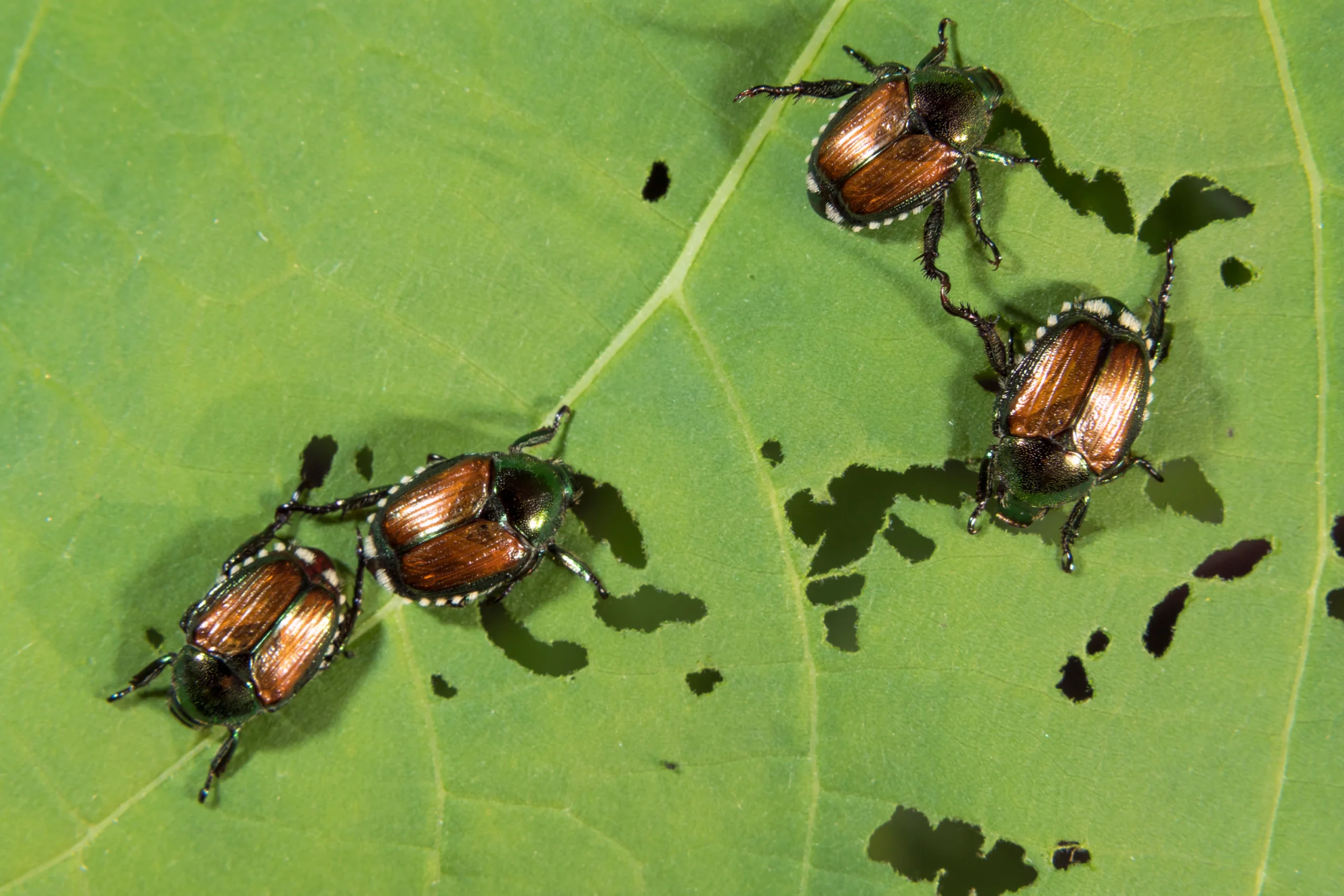
If you’ve noticed shiny, metallic green beetles chewing through your roses, grapevines, or ornamental plants, you’re not alone. Japanese beetles have become one of Colorado’s most destructive landscape pests, causing significant damage to residential gardens and commercial landscapes throughout the Front Range.
While these invasive insects may be small, they can quickly turn healthy plants into skeletonized leaves and stressed landscapes if left untreated. Fortunately, understanding their life cycle and taking proactive lawn maintenance can help protect your outdoor space before an infestation gets out of hand.
Here’s what every Colorado homeowner should know about preventing and managing Japanese beetles.
What Are Japanese Beetles?
Japanese beetles (Popillia japonica) are invasive insects originally introduced to the United States in the early 1900s. Adult beetles are easy to identify by their metallic green heads, copper-colored wing covers, and small white tufts of hair along the sides of their abdomen.
Although adult beetles only live for about six to eight weeks, they can cause extensive damage during that time by feeding in large groups. Even more concerning, their larvae, commonly called white grubs, live underground and feed on grass roots, potentially damaging lawns before emerging as adults the following summer.
Why Japanese Beetles Are a Growing Problem in Colorado
For many years, Colorado’s dry climate naturally limited Japanese beetle populations. However, increased irrigation, expanding urban landscapes, and favorable growing conditions have allowed these pests to establish themselves throughout much of the Front Range.
Communities, including Denver, Boulder, Lakewood, Aurora, Fort Collins, and surrounding areas, continue to see increasing beetle activity each summer. Once established in a neighborhood, adult beetles can easily fly from property to property, making early intervention especially important.
When Are Japanese Beetles Most Active?
Understanding their life cycle helps determine the best time for prevention.
Adult beetles typically emerge in late June through early July, with activity peaking during July and early August. During this period, they feed aggressively on leaves, flowers, and fruit while mating and laying eggs in irrigated turfgrass.
The eggs hatch into grubs later in the summer, where they remain underground feeding on grass roots throughout the fall before overwintering in the soil.
Because the insects spend much of their lives underground, effective management often involves addressing both adult beetles and developing grubs.
Signs of Japanese Beetle Damage
Early detection can prevent widespread landscape damage.
Common signs include:
- Leaves with only veins remaining, creating a “lace-like” appearance
- Ragged holes in flowers and foliage
- Clusters of metallic green beetles feeding together
- Brown patches developing in lawns from grub damage
- Increased activity from birds, skunks, or raccoons digging for grubs
Adult beetles release pheromones that attract even more beetles, so small infestations can quickly become much larger if ignored.
Plants Most Commonly Affected
Japanese beetles feed on more than 300 plant species, but they do have favorites.
Some of the most commonly affected landscape plants in Colorado include:
- Roses
- Grapevines
- Virginia creeper
- Linden trees
- Crabapple trees
- Flowering plum
- Birch trees
- Hollyhocks
- Hibiscus
- Fruit trees including apple and cherry
While these plants may experience the greatest damage, beetles can also feed on numerous ornamental shrubs, perennials, vegetables, and annual flowers.
How to Protect Your Colorado Landscape
The best defense against Japanese beetles is a proactive, integrated approach.
Choose Resistant Plants
While no landscape is completely beetle-proof, selecting plants that Japanese beetles tend to avoid can reduce future problems.
Many native Colorado plants, ornamental grasses, conifers, and drought-tolerant perennials experience significantly less feeding than roses or grapevines.
When planning a new landscape, incorporating a diverse mix of resistant species can naturally reduce pest pressure.
Monitor Early
Beginning in late June, inspect susceptible plants several times each week.
Catching the first few beetles before they attract larger groups is one of the simplest ways to limit damage.
Pay special attention to roses, flowering shrubs, and fruit trees, as these are often among the first plants targeted.
Hand Removal
For small infestations, hand removal remains one of the most effective options.
Early in the morning, when beetles are less active, gently shake them into a bucket of soapy water. Removing beetles before they release aggregation pheromones helps prevent larger infestations from developing.
Maintain Healthy Plants
Healthy plants are better equipped to tolerate insect feeding.
Proper watering, mulching, pruning, and fertilization reduce plant stress and encourage vigorous recovery after minor damage.
Professional property care also allows early identification of pest problems before significant injury occurs.
Should You Use Japanese Beetle Traps?
Many homeowners assume beetle traps are the best solution, but that’s not always the case.
While traps can capture thousands of Japanese beetles, research has shown they may actually attract even more beetles into your yard than they remove.
If traps are used, they should be placed well away from desirable landscape plants to help draw beetles away rather than toward valuable ornamentals.
In many residential landscapes, other control methods provide better overall results.
Managing Grubs Before They Become Beetles
Because Japanese beetles begin life as grubs beneath your lawn, controlling them early may help reduce future adult populations.
Proper lawn management includes:
- Monitoring grub populations
- Watering efficiently rather than excessively
- Maintaining healthy turf
- Applying grub control treatments when appropriate and at the correct time of year
A professional evaluation can determine whether grub treatments are necessary based on infestation levels rather than applying products unnecessarily.
Creating a More Resilient Landscape
One of the best long-term strategies for minimizing pest problems is designing a healthy, balanced landscape.
A thoughtfully designed Colorado landscape often includes:
- Native and climate-adapted plants
- Diverse species rather than large monocultures
- Proper spacing for good airflow
- Efficient irrigation systems
- Healthy soil with organic amendments
These practices not only improve plant health but also reduce overall susceptibility to insects, diseases, and environmental stress.
When to Call a Landscape Professional
While minor infestations can often be managed by homeowners, widespread beetle activity may require professional assistance.
Landscape professionals can:
- Correctly identify insect damage
- Recommend integrated pest management (IPM) strategies
- Evaluate lawn health and grub activity
- Improve plant vigor through proper maintenance
- Recommend plant replacements better suited for Colorado conditions
An experienced team can also help determine whether damage is cosmetic or likely to affect long-term plant health.
Protect Your Landscape Before Beetles Take Over
Japanese beetles may be persistent, but they don’t have to take over your landscape. By monitoring susceptible plants, maintaining healthy gardens, and taking action early, you can significantly reduce damage while protecting your investment.
At Lifescape Colorado, we understand the unique challenges of maintaining beautiful landscapes along the Front Range. From custom landscape design and sustainable plant selection to year-round property care and maintenance, our experienced team helps homeowners create outdoor spaces that remain healthy, resilient, and beautiful in every season.
If you’re concerned about Japanese beetles or want a landscape that’s designed to thrive in Colorado’s climate, contact Lifescape Colorado today. We’ll help you develop a customized plan to protect your landscape and keep it looking its best for years to come.